Testing and Condoms: Straight Porn vs. Gay Porn

As I continue to research the issue of Ballot Measure B, the “Condoms in Porn” law, it became apparent that we have a divided industry. Actually it is more like two separate and distinct industries. We share common interests. We often share the same distribution channels and profit streams. There are now even companies that produce both gay and straight content ( ie., Naughty America-> http://www.suite703.com/ and Manwin-> http://www.men.com/ ). San Francisco and Los Angeles lie only 382 miles from each other but they might as well be on different coasts. When it comes to the issues of testing and condoms we could not be any more different or diametrically opposed.

The straight industry tests and doesn’t usually use condoms. The gay industry rarely tests and usually uses condoms, though in recent years even the use of condoms in gay porn is diminishing while testing is increasing. For performers in the gay community the issue of HIV status is treated as a closely guarded secret while in the straight industry test results are passed out like candy at a five year old’s birthday party.

In the straight industry if a performer is HIV+ there simply is no work for them. According to an article in Out Magazine, according to Michael Stabile, then Marketing Director for NakedSword.com, it was estimated that nearly 50% of all performers in gay porn are HIV+ ( Please see:  http://www.out.com/entertainment/2007/07/23/baring-truth?page=0,1 ). A survey by TheSword.com of 100 gay male performers put that estimate closer to a 30% HIV+ rate (Please see: http://www.advocate.com/health/2009/08/12/business-pleasure?page=0,1 ).

Kent Taylor of Raging Stallion Studio claims;

“We don’t currently ask [about HIV status]. We assume everyone is [HIV-positive], and if they say they are not, we assume they are lying.”

Michael Lucas, owner of Lucas Entertainment, does not believe that HIV status should be discussed in polite circles ( Please see: http://www.advocate.com/politics/commentary/2011/09/27/oped-live-world-where-everyone-has-hiv )

“I’m in favor of a “don’t ask, don’t tell” policy. Not in the military, of course — those days are behind us — but in the bedroom. What I’m talking about, specifically, is HIV. And my point is that, at least when it comes to sex, we should talk about it less.”

So in gay porn it is a matter of not testing and/or not sharing of HIV status and just simply using a condom to protect the performers. However, do condoms really protect the performers ? Does less than complete adherence to condom use even in a performer’s private sexual life keep them safe ? According to Stabile ( Please see: http://www.out.com/entertainment/2007/07/23/baring-truth?page=0,1 );

I’ve talked to some of them [gay male performers], and they say, ‘The only time I ever have sex with a condom is on-screen.’

Therefore, if some gay performers are only using condoms on set and not in their personal lives and not testing, it is impossible to know actually how many HIV transmissions are occurring on gay sets. Michael Weinstein of the AIDS Healthcare Foundation is not concerned with performer health and safety in the gay industry because according to a statement he made to this author at a September 17, 2012 press conference “the majority of gay porn is made with condoms.” His belief is that condoms protect.

This opinion is echoed by Michael Lucas;

“In fact, it’s hard to get HIV even from sex — as long as you use a condom. I dated a positive guy for two years in the 1990s; we had safe sex almost every day, and I never seroconverted. Today, it is even more difficult to become infected through protected sex. Recent studies suggest that HIV-positive men who are taking their medications pose a vastly reduced risk of transmitting the virus.”

Obviously there is a school of thought in the gay porn production community that test results do not really mean much if you are using a condom. Most gay studios only use condoms for anal sex. Rarely are they used for oral sex. Condoms may protect from HIV but they do not protect from oral chlamydia, gonorrhea, HPV and herpes if they are not being used. How many gay performers have contracted chlamydia, gonnorhea and HPV of the throat or herpes simplex 2 around their mouths ? Without testing there is simply no way to know. And therefore Michael Weinstein’s belief that gay performers are some how better protected from STIs because they use a condom for anal sex is terribly flawed logic.

In straight porn there is almost no one that will work with a known HIV+ positive performer with or without a condom. Matter of fact, the way the FSC/APHSS testing system works is to flag a performer that tests positive for HIV. The database will indicate that they are not cleared to work. At that point the straight industry would undergo a complete shut down of production until a full tree of potential exposures could be established and all performers that had been exposed re-tested. Any positive performers would then be re-tested again to confirm their status. This is a completely different from the gay industry that almost assumes all performers are HIV+.

According to many producers in straight porn, mandatory condoms would decimate the industry in Los Angeles. According to producers in gay porn, mandatory testing would decimate the industry in San Francisco ( Please see: http://www.advocate.com/health/2009/08/12/business-pleasure?page=0,1 ).

So how does an industry divided rectify this situation and come together to be united ? Can that even be achieved ? Can there be common ground reached to ensure profits while maintaining worker safety and participation ? The issues of government mandated condoms or industry mandated testing must be discussed openly. As more performers cross in-between both sides of the industry this topic will only become more heated and divisive if not handled properly.
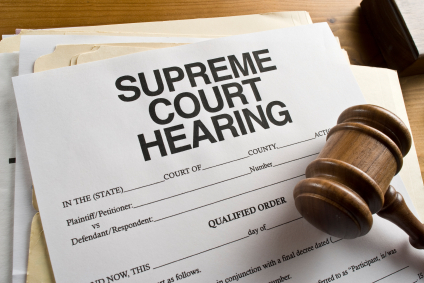
 

Condoms & The First Amendment…

Los Angeles County’s Measure B, the “Condoms in Porn” law, has caused much discussion in the media as well as the industry as to whether such a mandate is a violation of a performer and producer’s First Amendment free speech rights. Whether it is a violation of the U.S. Constitution will be left to the courts to decide. It is, without question, a law that can be challenged. The United States’ Constitution is the supreme law of the land. Which means no other law can violate the rights guaranteed by the Constitution – not even workers’ safety laws.

In regulating commercial speech the government has to show that condom law passes what is known as the Central Hudson test ( Please see: http://itlaw.wikia.com/wiki/Commercial_speech ). In regards to free speech and pornography, the United States’ Supreme Court has indeed ruled that hardcore pornography is legal and in fact is protected by the First Amendment and therefore entitled to protection under the Constitution ( Please see: http://en.wikipedia.org/wiki/Miller_v._California ).

Many have also questioned who holds such free speech rights – the producers or the performers ? The answer is that both producers and performers hold equal rights in that regard. Performers, like dancers in gentlemen’s clubs, do in fact express themselves while performing in an adult scene or movie. There are several U.S. Supreme Court decisions that hold a dancer’s nude dancing is in fact expressive free speech. ( Please see: http://en.wikipedia.org/wiki/Barnes_v._Glen_Theatre,_Inc. )

Can Free Speech Be Restricted ?

Commercial free speech can be regulated. There are two types of restrictions on commercial free speech, content and non-content based restrictions. An example of content based restriction would be a law that prohibited a newspaper from publishing the name of a rape victim. An example of a non-content based restriction would be zoning laws regulating the time, manner and place a business owner could operate a gentlemen’s club within a city or county. Content based restrictions require the court to impose a “strict scrutiny” test, meaning that the law has to promote a compelling governmental interest and it has to do so in the least restrictive means possible. For non-content based restrictions the court will used what is called “intermediate scrutiny,” meaning the law has to promote a significant, substantial or important government interest and it must be done in a way that is narrowly tailored to the governmental interest. Under intermediate scrutiny there are basically two tests the court uses 1) time, place and manner and 2) incidental, which means regulations that are aimed at conduct that is not speech but do infringe on speech.

A government mandated condom law would be a regulation that is not aimed at actual speech but rather conduct however it does infringe on the free speech rights of the producers and performers. In U.S. Supreme Court cases that have primarily been focused on gentlemen’s clubs, those looking to restrict nude dancing have used the argument that regulations imposed on them are merely trying to alleviate the “secondary effects” that gentlemen’s clubs supposedly cause such as crime, prostitution and blight on the neighborhood they are located in. I imagine that the government may also try to use a secondary effects argument in favor of the condom law, if it were ever to be challenged. I believe that they will claim that condoms in porn will protect the health of the general public since members of the adult industry will spread disease to those in the general public. Whether this argument will work is unknown.

None the less, a government mandated condom law is a restriction of free speech of both performers and producers. Since it is not content based, if challenged in court, it would receive intermediate scrutiny and the court would examine whether the government has a significant, substantial or important governmental interest and whether the law is narrowly tailored to those goals.

Therefore the question will be is the health and safety of workers in the adult industry a significant, substantial or important governmental interest. And if so, is the condom law narrowly tailored to promoting that goal. In other words does the law restrict the least possible amount of speech to accomplish the goal of protecting adult industry workers.

More than likely the courts will find that the health and safety of adult performers are an important governmental interest. The argument on behalf of the industry would probably be that STI testing achieves the same goal of the condom mandate without restricting any speech.

The industry could also make the argument that only the state of California has the ability to regulate workplace safety and therefore the law exceeds the power of Los Angeles County or any city that adopts a similar law such as the City of Los Angeles Safer Sex in Adult Films Ordinance.

In the coming weeks I will be writing more on this subject. However, if you are interested in this issue I suggest that you do some research and educate yourself. Especially if you are a producer or performer in the industry. You might be interviewed by someone in the media in the coming weeks as Election Day approaches.

A good starting primer on First Amendment issues is attached to this article. It was written by an attorney for the Congressional Research Service in October 2009. It basically states how the government can regulate free speech and how it needs to go about doing it. Its an inside look inside their “playbook.”

FreeSpeechPrimer


Can the HIV Virus Pass Right Through Latex Condoms ?

In my research on whether condoms contain the cancer causing chemical Nitrosamines I also stumbled upon other interesting facts about condoms. The most interesting came from the June 1993 Rubber World Magazine ( http://www.rubberworld.com/ ). Rubber World Magazine is the rubber industry’s technical trade magazine. The author of the article is Dr. C.M. Roland, Head of Polymer Physics Naval Research Laboratory. Here is his brief bio;


Biographical Sketch:
Mike Roland is a physical chemist and head of the Polymer Physics Section at the Naval Research Laboratory. His research interests are the mechanical and viscoelastic properties of materials. He received his PhD in chemistry from the Pennsylvania State University in 1980, and prior to joining NRL in 1986 was a group leader at the Firestone Central Research Laboratories in Akron, OH. From 1991 to 1999 he edited the American Chemical Society journal “Rubber Chemistry & Technology”, and currently is on the editorial board of “Macromolecules”. His awards include the Sparks-Thomas Award (ACS) in 1991, Edison Award (NRL) in 2000, Melvin Mooney Award (ACS) in 2002, Sigma Xi Award for Pure Science (NRL) in 2002, and he became a Fellow of the Institute of Materials, Minerals, and Mining (UK) in 2008. He has authored over 300 publications and holds 13 patents.

Dr. Roland’s has stated that latex condoms are actually ineffective in stopping the spread of the HIV virus. His research showed that latex condoms, on the molecular level, have holes in them that are simply too large to stop the HIV virus from passing through the latex membrane.

I suggest that everyone reading this article read his article in its entirety. You can find it here -> http://www.thefreelibrary.com/The+barrier+performance+of+latex+rubber.-a014089514. I will quote some of the more important facts from his article.

Dr. Roland states;

“The defining feature of viruses is their diminutive size; electron microscopy reveals the AIDS virus to be only 100 to 120 nm (0.1 micron) in size. This is consistent with their passage through polycarbonate filters with holes in the 0.1 to 0.2 [Micro]m range.  The size of HIV is 60 times smaller than the bacteria causing syphilis and 450 times smaller than human sperm… Clearly, the use of a condom or rubber glove for barrier protection from a virus represents a different problem from that of preventing bacterial infection or conception.”

Condoms were developed to prevent pregnancy. They have also proven to be useful in preventing certain bacterial sexually transmitted disease such as gonorrhea, chlamydia and syphilis. However, according to Dr. Roland, based on the extremely small size of the HIV virus – latex condoms are not completely effective to prevent the spread of the HIV virus.

Roland goes on to state that the “water-leakage” test used by many condom manufacturers is simply not suitable to test for HIV transmission rates through the latex membrane. Basically HIV is smaller then even water molecules, Roland states;

“These results indicate that the water leakage test is not adequate for the detection of the small holes relevant for viral transmission. This was directly demonstrated in a study of the ability of latex condoms to prevent passage of fluorescence labeled polystyrene microspheres, 110 nm in diameter (i.e., equivalent in size to the AIDS virus). One-third of the condoms, none of which contained holes large enough to be rejected by the water leakage test, allowed passage of the microspheres, with fluid flow rates lying in the range of 0.4 to 1.6 nanoliters per second.”

He based his opinion on the findings of a 1992 condom research study performed by the FDA. Physical science researchers tested the ability of 89 undamaged latex condoms manufactured in the US to prevent passage of HIV size particles under simulated physiologic conditions at their Food and Drug Administration laboratory in Rockville, Maryland. You can read an abstract of their research here -> http://www.ncbi.nlm.nih.gov/pubmed/1411838

Here’s is what the FDA found;

Leakage of HIV-sized particles through latex condoms was detectable for as many as 29 of the 89 condoms tested. Worst-case condom barrier effectiveness (fluid transfer prevention), however, is shown to be at least 10 times better than not using a condom at all, suggesting that condom use substantially reduces but does not eliminate the risk of HIV transmission.”

These findings have nothing to do with whether the condom was properly used. These test results only speak to whether the condom itself has holes in it large enough to allow the HIV virus to pass through it. Obviously, not properly using a condom, as well as breakage and slippage will only increase its ineffectiveness.

Before anyone throws anything at their screen in anger allow me to discuss the National Institute of Health’s condom effectiveness study released in July of 2001. To address the questions raised by Roland and other researchers, the NIH held a conference in June 2000 where this issue was investigated further. The report was limited to evaluating the effectiveness of male latex condoms used during penile-vaginal intercourse. It examined evidence on eight STIs—HIV, gonorrhea, chlamydia, syphilis, chancroid, trichomoniasis, genital herpes and genital human papillomavirus. The data presented in the report found that male latex condoms are effective in preventing the most serious STI (HIV), the most easily transmitted STIs (gonorrhea and chlamydia) and another important sexually transmitted condition (unplanned pregnancy).

However, the NIH report only stoked the fires of additional debate as to the effectiveness of the male condom to prevent the transmission of STDs. Many attacked the report on political as well as scientific basis.

None the less, no matter what side of the “condoms in porn” debate you may be on the facts are relatively clear. Condoms help in preventing the transmission of HIV but are not 100% effective in the complete prevention of HIV transmission.

One study of heterosexual couples by Department of Preventive Medicine and Community Health of the University of Texas found that in cases were one partner was HIV+ and the other was HIV-, a condom’s effectiveness;

“at preventing HIV transmission is estimated to be 87%, but it may vary between 60% and 96%.”

(Please see http://www.ncbi.nlm.nih.gov/pubmed/10614517 )

I strongly suggest that everyone do their own research as to this topic. There are many competing voices and view points. Please educate and decide for yourself.

Performers: Can Condoms Cause Cancer ?

As a former employment and workers’ compensation attorney I often had to research the potential side-effects of different chemicals my clients were exposed to while “on-the-job.” Since Cal-OSHA, the City of Los Angeles and now possibly the County of Los Angeles all want to make condoms mandatory for the industry one of the first questions that everyone should be asking is – Are condoms safe ?

I realize that seems like a strange question to ask since the motivating idea behind the use of condoms is to make the industry more safe from the spread of different STDs. However, the question needs to be asked since condoms may in fact do more harm than good.

I experienced this same issue several years ago, as an attorney for employers in California, when there was a push to require back braces for those that worked in warehouses. The common belief was that a back brace worn by an employee would give that employee more back support and thus cut down the rate and severity of low back injuries in the state’s workforce. It seemed like a reasonable position. Until studies were performed that showed that wearing a back brace actually INCREASED the number of back injuries since those wearing them believed it provided them with some sort of magically lifting powers. By wearing a back brace they actually tried to lift heavier items they would not have tried to lift if they did not wear a back brace. And thus, the number of low back injuries actually increase because of their use.

Therefore I wondered if there were studies about condoms as to the same issue. Does wearing a condom provide a sense of superior safety which may result in actual riskier behavior. So I did research, as attorneys often do.

What I found is much more concerning and confusing. Condoms contain a substance that in known to cause cancer. And not only does it contain a substance known to cause cancer, that substance, known as Nitrosamines, is actually a REGULATED chemical under California Occupational Safety & Health Regulations ( Please see http://www.dir.ca.gov/title8/339.html ). According to the United States Department of Labor, exposure (to Nitrosamines) by all routes should be carefully controlled to levels as low as possible (Please see http://www.osha.gov/dts/chemicalsampling/data/CH_258000.html ).

And here is what US OSHA states Nitrosamines can do to the human body;

Potential Symptoms: Irritation of eyes, skin, respiratory tract; nausea, vomiting, diarrhea, abdominal cramps; headache; sore throat, cough; weakness; fever; enlarged liver, jaundice; decreased liver, kidney, and pulmonary function; low platelet count; [potential occupational carcinogen]

Health Effects: Cancer (HE1); Liver cirrhosis (HE3); Suspect teratogen (HE5)

Affected Organs: Liver, kidneys, lungs

A German study found that; ( Please see http://www.dw.de/dw/article/0,,1220847,00.html )

The condoms, which were kept in a solution with artificial sweat, exuded huge amounts of cancer-causing N-Nitrosamine from its rubber coating. Researchers measured amounts of N-Nitrosamine, that were way above the prescribed limits for other rubber products such as baby pacifiers.

“N-Nitrosamine is one of the most carcinogenic substances,” the study’s authors said. “There is a pressing need for manufacturers to tackle this problem.”

Then I thought to myself this cannot be true. Where are all the penis & cervical cancer cases ? Surely the world would have heard reports of an increase in these types of cancers if in fact the chemicals in condoms caused cancer. So I did more research, as attorneys often do. And then I found the actual study performed by the German researchers. It is published on the National Institute of Health Website (Please see http://www.ncbi.nlm.nih.gov/pubmed/11759152 ).

Here is a excerpt from the study; (I highlighted the important parts relevant to this discussion)

Previously, endogenous nitrosamine formation in the vagina has been suggested as a cause of cervical cancer. It was speculated that exogenous N-nitrosamines and N-nitrosatable compounds from condoms may also lead to genital cancer. Therefore, we reviewed the literature and calculated the risk for the induction of tumors by nitrosamines from condoms. In vitro Biaudet et al. (1997) found up to 88 ng nitrosatable compounds migrating from condoms to cervical mucous within 24 hrs. During sexual intercourse about 0.6 ng may migrate in the female genital mucous membranes because of the short contact to the condom, e.g. 10 min. Comparable amounts of nitrosamines may also migrate in the penile skin. Estimating 1500 contacts to condoms during lifetime (50 condoms/year for 30 years) this may result in the adsorption of up to 0.9 microgram nitrosamines in total.

This study was based on the use of condoms for personal sexual activity NOT commercial sexual activity. The researchers used 10 minutes for an exposure period having sex once a week for 30 years. Based on that they concluded that condoms did not present a risk of increased cancer rates. I tried to find an example of another study where condom use was much greater but I could not find one (Perhaps if someone can find a research paper as to the use of condoms for sex-workers and increased cancer rates from exposure to Nitrosamines that would be most beneficial).

Taking their research a step farther and applying it to the industry sex practices, it is possible for a male performer will have to use a condom for up to 6 hours a day (2 scenes)  for up to 5 days a week. This is 17,900% increase in exposure over how much time the typical man would wear a condom in his lifetime according to the German’s study. And that is only in one week of exposure to the male performer. Compound that number by years of performing and now there is a substantial increased risk of developing cancer, even using this study’s parameters.

So here we have Cal-OSHA demanding that the industry use condoms to comply with blood-borne pathogen laws when their own regulations indicate that Nitrosamines cause cancer and there has been NO studies performed that show that long term industrial exposure to the Nitrosamines in condoms is safe.

Why hasn’t this issue been raised in the debate as to whether condom use should be mandatory? Why are condoms being forced on the industry before any controlled studies have been completed as to high exposure and long term effects of Nitrosamines are more closely examined ?

Oh yes, because condoms are being pushed by the AIDs Healthcare Foundation and the health and safety of performers would only get in the way of their safer sex message for the general public, who will never develop cancer from the use of a condom.


The Condoms Have Arrived (Sort Of)

As you may remember from my article last summer for XBIZ World, I declared that the condoms were coming. That declaration was in reference to the position that Cal/OSHA had taken at the June 7, 2011, meeting in Los Angeles where a strong contingency of representatives of the industry turned out to battle their attempts to (further) mandate barrier protection use in the production of adult entertainment. It should be noted that technically, barrier protections are and have been mandated by California Code of Regulations, Title 8, Section 5193 for quite some time. However, the enforcement of such regulation has been spotty at best.

Based on the rather slow enactment of additional barrier protection regulation by Cal/OSHA, Michael Weinstein and the AIDS Healthcare Foundation decided to take their safe sex battle to a different receptive governing body, the Los Angeles City Council and Mayor Antonio Villaraigosa.

What Does The Act Require

On Jan. 23, Villaraigosa signed into law, the City of Los Angeles Safer Sex in the Adult Film Industry Act, hereby now requiring any production of adult content, within the limits of the City of Los Angeles, to use condoms for anal and vaginal sex while filming content involving penetration and ensuring that all ejaculate remains outside of a performer’s body. The act also requires all producers to be compliant with CCR Title 8, Section 5193, noted above.

Where Does The Act Apply (or doesn’t)

If you are not aware of the city limits of Los Angeles it may be easier to understand what cities the Act does not apply to. Remember this is a City of Los Angeles law and not a County of Los Angeles law. The Board of Supervisors of the County of Los Angeles has not (yet) adopted this law and therefore there are still numerous unincorporated cities in Los Angeles County where the act does not apply. Also, the act is not law within the 88 other incorporated cities in the County of Los Angeles.

For example Agoura Hills, Alhambra, Arcadia, Artesia, Avalon, Azusa, Baldwin Park, Bell, Bell Gardens, Bellflower, Beverly Hills, Bradbury, Burbank, Calabasas, Carson, Cerritos, Claremont, Commerce, Compton, Covina, Cudahy, Culver City, Diamond Bar, Downey, Duarte, El Monte, El Segundo, Gardena, Glendale, Glendora, Hawaiian Gardens, Hawthorne, Hermosa Beach, Hidden Hills, Huntington Park, Industry, Inglewood, Irwindale, La Cañada Flintridge, La Habra Heights, La Mirada, La Puente, La Verne, Lakewood, Lancaster, Lawndale, Lomita, Long Beach, Lynwood, Malibu, Manhattan Beach, Maywood, Monrovia, Montebello, Monterey Park, Norwalk, Palmdale, Palos Verdes Estates, Paramount, Pasadena, Pico Rivera, Pomona, Rancho Palos Verdes, Redondo Beach, Rolling Hills, Rolling Hills Estates, Rosemead, San Dimas, San Fernando, San Gabriel, San Marino, Santa Clarita, Santa Fe Springs, Santa Monica, Sierra Madre, Signal Hill, South El Monte, South Gate, South Pasadena, Temple City, Torrance, Vernon, Walnut, West Covina, West Hollywood, Westlake Village and Whittier do not have a similar law mandating condoms as a condition to receive a film permit. However, two cities in Ventura County, Moorpark and Simi Valley, are contemplating passing similar municipal laws.

Also, the act does not apply to the 144 unincorporated areas of Los Angeles County. The act is not law in Ventura County or any other county in California, at the time this article was written.

The act is law only in the City of Los Angeles. However, it is the law and must be adhered to if a production is going to occur at a location that is within the City of Los Angeles. If a production is outside the limits of the City of Los Angeles, then the use of barrier protection is not a required condition to securing a permit.

Who Is Required to Secure a Permit for Production ?

If you are going to produce a commercial shoot in any of the following areas; the County of Los Angeles, the City of Los Angeles, Diamond Bar, City of Industry, Lancaster, Palmdale or Southgate you must apply for a receive a permit through a non-profit organization called FilmLA Inc. (FilmLA.com). Other cities may have their own permit process so it is imperative that you check with each city’s permit department and remain compliant with those laws. However, for purposes of this article we will focus on productions within the City of Los Angeles.

Without or without condom, it should be noted that shooting a commercial production within the City of Los Angeles without a permit is considered a misdemeanor.

Since the fall of 2009, Section 41.20 of the Los Angeles Municipal Code (LAMC) makes it a misdemeanor offense for production companies to film without a permit. Since the then, the LAPD’s Contract Services Section Film Unit has made arrests and filed charges against film producers for Section 41.20 violations. Under Section 41.20, an unpermitted producer’s equipment can also be confiscated until the time of the court hearing to insure that the producer appears at the court. Obviously, if the producer is renting equipment by the day this could end up being more costly that the fine itself for failing to secure a permit. Needless to say, failing to secure a permit can not only end in heavy costs and fines but also jail time since a misdemeanor offense is punishable by incarceration for up to one year in jail.

What Is a Commercial Shoot ?

Under the City of Los Angeles Planning and Zoning Code section 12.22(A)(13), which requires all producers to secure film permits, it is safe to assume that every adult production would be considered a commercial shoot and thus would require film permit, even it occurred in the producer’s own home. The one area that is still somewhat gray is whether a webcam production would require a permit. And taking the act one step further, would a webcam show involving penetration between a husband and wife for commercial purposes require a permit and, if it occurs within the City of Los Angeles, a condom to prevent the exchange of bodily fluids between two married and consenting adults? This is one area of the law that has yet to be defined.

Do Content Trades Now Require Condoms?

The short answer is yes. As you may remember from some of my earlier articles about the condom law I had indicated that any attempt by Cal/OSHA to impose condoms would not apply to content trades. Cal/OSHA is a regulatory body that only has power over employment practices. A true content trade between performers would not involve employment issues and therefore Cal/OSHA had no legal authority to enforce condoms be used in that regard. However, now that condoms are no longer tied to the issue of employment, but rather as a condition of receiving a film permit, even a content trade would be considered a commercial shoot. Condoms would therefore have to be used on any hardcore production within the City of Los Angeles. As I noted above, the Act is so far reaching even a married couple in the privacy of their own home performing on web cam together may need a permit and a condom to stay compliant of the law.

Enforcement of the Act

Over the past several weeks I have received numerous phone calls from agents, producers, directors and even performers as to how the act will be enforced. At the time of writing this article that question remains unresolved and unanswered. Since the act has been signed into law by Mayor Villaraigosa there has been discussion about forming a committee to decide how to enforce the act. Within the provisions of the act there is a language that allows the City of Los Angeles, through its contracted agency, FilmLA Inc., to charge additional fees to pay for “inspectors to ensure compliance with conditions on film permits.”

Without going into a full analysis of First Amendment law, the act may be subject to a future legal challenge based on the its lack of content neutrality. Meaning that the city should not be able to impose a tax, which is what these additional fees may in fact be, based solely on the adult nature of the productions. This is still an area of law that is in flux though.

For argument’s sake, let’s assume that the law is not challenged. The obvious question is how will the city ensure compliance? While it is not known at this point how compliance will occur, my assumption will be that it will follow the same path that the Los Angeles Police Department used to ensure permit compliance in the past.

In past years I had been called to set several times by several different clients where a “bust” by LAPD was occurring. Previously, the San Fernando Valley vice unit of LAPD was responsible for policing and enforcing the permit law in regards to adult productions. Then, towards the end of 2007 Mayor Villaraigosa started a special unit that would target unpermitted productions, mainstream and adult. This unit comprised of uniformed and plain clothes officers.

Often the LAPD permit enforcement unit would work closely with FilmLA Inc., and perform spot checks on known shoot locations. FilmLA Inc., would provide shoot location information to the unit and a patrol car would be sent to drive by the location to check to see if there was any abnormal activity at the location, meaning, if someone was shooting at that location on that day without a permit. If they suspected that someone was shooting they would knock and ask questions and in some instances, when no one answered and they would jump a fence and/or gate to investigate.

While it is impossible to say with certainty whether this will be the way to enforce the act, I would suspect that it may be. Others have talked about requiring a nurse to be on all permitted sets as well to ensure compliance. There have been rumors that the City of Los Angeles will subpoena information from the agents and producers to learn the usual (unpermitted) adult production shoot locations. I doubt that this will happen but it is certainly a possibility. This type information has been subpoenaed in the past by Cal/OSHA from talent agents in the industry.

Penalties for Failure to Use a Condom

The actual law does not contain any information as to the possible penalties for shooting adult content within the City of Los Angeles with a permit and without barrier protection. I am sure that the committee previously noted will be setting the penalties associated with the act. As for shooting without a permit, those penalties have been previously noted. At this time, I do not know if there will be an enhanced violation for shooting adult content without a permit and without a condom.

It is the opinion of this author that it is just simply too early to begin to panic over this law. It does not appear that the city has yet formed the committee to devise the manner of enforcement or the penalties associated with it. There has been discussions of a March 5 date that the law will be implemented.

Hopefully, by then there will be more information released by the City of Los Angeles. I have talked with numerous people in the industry about their desire to move to Las Vegas, Miami or Phoenix to produce. It’s not necessary to leave Los Angeles to produce. Just based on the geographical limitations of the law, it is rather easy to produce around it.

As more information becomes available I will update this article. This author hopes that by the time this article is in print, the City of Los Angeles will have promulgated rules on to how to comply with this new law and the penalties involved for violating it. In my next article I will discuss those issues as well as tips on how to avoid being found in violation of the act.

The Condoms are Coming

http://www.xbiz.com/articles/137838/fattorosi

With words similar to those, Paul Revere ushered in a revolution that transformed the face of a nation. Similarly, on June 7, Cal/OSHA changed the shape of this industry’s future which might ultimately lead to a revolution in adult entertainment. I was able to attend the meeting and even tweeted the discussions from the meeting live via my Twitter account. As it has been reported, the turnout was strong with numerous industry people in attendance representing all aspects of the industry.

What was quite clear from the meeting was the absolute distrust the industry has for those on the Cal/OSHA Board that have drafted the proposed regulations. There were statements made during the meeting that Cal/OSHA was attempting to regulate the industry out of existence for moralistic and religious reasons or perhaps that the AIDS Healthcare Foundation, the Pink Cross Foundation and Cal/OSHA were in some way working together to drive the industry out of California.

I can certainly understand how many in the industry may feel this to be true, from my experience dealing with Cal/OSHA and state safety regulations, that is simply not the case. Cal/OSHA is attempting to bring this industry in line with numerous other industries that are regulated in regards to employee safety. Cal/OSHA actually feels that the proposed regulations are less intrusive and harsh than the current regulations. While the new regulations proposed by Cal/OSHA are yet to become law and may not for another year, it was clear from their meeting that condoms and other barrier protection methods are now required and are currently the law in porn.

Under the proposed regulations, barrier protection and condoms may not have to be utilized for oral sex scenes when certain requirements are met by the producers and talent. However, other than that one issue, barrier protection and exposure issues will change how adult entertainment is produced and consumed.

Unfortunately due to the heated nature of the meeting, not all issues could be covered and there are still numerous discussions that are necessary as to the most basic issues such as how to dispose of the used barriers, how to handle clothing used on set, record keeping requirements and employee training issues. This article will focus on the proposed regulations and want it means to producers and talent.

INDEPENDENT CONTRACTORS OR EMPLOYEES ?

One of the first issues to be raised during the meeting was that the proposed regulations only apply to employees and not independent contractors. Numerous performers and producers spoke up and attempted to declare themselves independent contractors and thus not bound by the regulations. Cal/OSHA did not directly address the IC vs. EE issue and merely referred the audience to the California Labor Code and existing case law.

Rest assured that for purposes of the proposed regulations, performers are indeed employees, even if only for a day, of the hiring studio. However, under the tax code, many of those same performers may actually be independent contractors. There are two different legal tests to determine employee status under the California Labor Code and the U.S. Tax Code. According to the Department of Industrial Relations of the state of California, the California Supreme Court has adopted the “economic realities test” as noted in S. G. Borello & Sons, Inc. vs. Dept. of Industrial Relations (1989) 48 Cal.3d 341. The economic realities test sets forth several factors for determining whether someone is an independent contractor or employee:

    • Whether the person performing services is engaged in an occupation or business distinct from that of the principal;
    • Whether or not the work is a part of the regular business of the principal or alleged employer;
    • Whether the principal or the worker supplies the instrumentalities, tools, and the place for the person doing the work;
    • The alleged employee’s investment in the equipment or materials required by his or her task or his or her employment of helpers;
    • Whether the service rendered requires a special skill;
    • The kind of occupation, with reference to whether, in the locality, the work is usually done under the direction of the principal or by a specialist without supervision;
    • The alleged employee’s opportunity for profit or loss depending on his or her managerial skill;
    • The length of time for which the services are to be performed;
    • The degree of permanence of the working relationship;
    • The method of payment, whether by time or by the job; and,
    • Whether or not the parties believe they are creating an employer-employee relationship may have some bearing on the question, but is not determinative since this is a question of law based on objective tests.

Even where there is an absence of control over work details, an employer-employee relationship will be found if (1) the principal retains pervasive control over the operation as a whole, (2) the worker’s duties are an integral part of the operation, and (3) the nature of the work makes detailed control unnecessary. (Yellow Cab Cooperative vs. Workers Compensation Appeals Board (1991) 226 Cal.App.3d 1288).

There is little doubt that a performer would be determined to be an employee under the above noted tests. Several studios have already been fined by Cal/OSHA and to this author’s knowledge none have been overturned on appeal. Most recently, Hustler Video was fined over $14,000 by Cal/OSHA for the lack of barrier protection on set, lack of a blood borne pathogen plan as well as other infractions. According to an article on XBIZ.com on April, 5, 2011, Hustler plans on appealing its fine. However, there has been no recent news as to that particular case.

The only potential exception this author can see to the regulations is when performers coproduce a scene and trade content with each other. As long as there is no monetary compensation offered as payment for services, then more than likely, Cal/OSHA would not determine that a content trade situation to be employment.

Getting past the IC vs. EE argument, what does this mean for the industry and how will the proposed regulations effect content production in California on a daily basis?

Condoms for blow-jobs? First, the proposed regulations require condoms and/or barrier protection (dental dams) for all sex scenes where there is a possibility of an exposure by a performer to the bodily fluids of another performer. The only exception to this has been carved out for mainstream studios in so much that saliva has not been classified as a bodily fluid. The reason for this exception is probably apparent to everyone except Cal/OSHA.

The only exception to the condom/barrier rule is for oral sex scenes and only when both performers have a clean DNA PCR HIV test as well as clean gonorrhea and chlamydia test results within 14 days of the scene and have both been completely vaccinated for Hepatitis B and HPV.

It should be noted that the proposed regulations call for urine testing as well as throat and anal swabbing for gonorrhea and chlamydia for both male and female performers. It should also be noted that it takes a series of three injections over the course of six months for someone to be fully vaccinated for hepatitis B. Therefore, all performers should immediately seek hepatitis B vaccinations so as to insure they can continue to work once the proposed regulations actually take effect.

If a performer is not properly vaccinated or does not have a clean test, then condoms/barrier protection must be used at all times.

No more facials? The next question is — what about the money shot? According to the proposed regulations ejaculate cannot be placed into any orifice and or on any non-intact skin. In layman’s terms, cream pies, facials and/or swallowing will no longer be allowed. Ejaculate can only make contact with intact unbroken skin found on a performer’s breasts/chest, back, legs and feet. Obviously, any producer is still free to use non-harmful fake ejaculate to simulate real cum or squirting.

If for some reason, real human ejaculate or bodily fluids other than saliva does find its way onto broken skin and or an orifice — that would be considered an “exposure” and immediate medical attention must be provided and documented by the employer. Further, the employer must provide post exposure testing and all results recorded in accordance with Title 8 of the California Code of Regulations Division 1, Chapter 7.

Now that AIM is gone what’s next? So who’s going to be paying for all this testing, vaccinations, record keeping and medical treatment because of wayward money shots? According to the proposed regulations, all medical testing fees, treatment and record keeping requirements must be paid for by the producers and studios. Which producer, well that answer wasn’t so clear according to Cal/OSHA.

Basically, Cal/OSHA’s position is that the employers (studios and producers) can ban together to create cooperatives to negotiate with medical care providers and testing centers to bargain for the best price and therefore it will even out over the long run. Cal/OSHA assumes that all producers and studios will be “piggybacking” off each other’s tests. Further, these new additional costs cannot be passed on to the performers or talent agents. It is solely the responsibility of the employer to pay for these costs. On the bright side for the studios and producers, they will now be able to dictate exactly where talent will receive their testing from.

The condom police? So how is Cal/OSHA going to enforce these new regulations once they go into effect? Are they going to be sending Cal/OSHA’s cops in lab coats and environmentally friendly smart cars in droves to Porn Valley to peak in on everyone? The answer might be yes.

According to Cal/OSHA, enforcement will occur in two ways. The first and most obvious is because of an employee (performer) calling into Cal/OSHA’s offices and reporting a violation of the regulations. This alert will mandate an investigation by their offices. They literally have no choice and must open an investigation and look into the performer’s complaint. Thus, that is the easiest and quickest way to get Cal/OSHA knocking on your door. Be aware that a complaint by a performer can be made anonymously as well.

The second is what the Cal/OSHA Board referred to as a sweep. It is possible that they will send out a contingent of inspectors on a regular basis to do spot checks on studios and producers. At least the ones they can locate. In my previous experience I have seen Cal/OSHA perform “sweeps” on rare occasion and do not think that will be a likely occurrence. However, it may occur once the proposed regulations take effect just as a gentle reminder that compliance is mandatory.

You may be asking how can Cal/OSHA determine the difference between a disgruntled performer from a competitor or even a group such as AIDS Healthcare Foundation making an anonymous report. I don’t know how they can but Amy Martin from Cal/OSHA did indicate that they have been dealing with this very issue with other industries and have developed the ability to determine the difference. It should be noted that only a complaint from an actual performer mandates an investigation. All other complaints do not require an investigation and Cal/OSHA has the discretion to take no action on a report of a violation.

Vegas baby, Vegas! Finally, one last point that has been overlooked by other writers, is there a threat of federal regulation. Cal/OSHA made it very clear that before their proposed regulations can go into effect they must first be approved by the federal OSHA. Which means that, once approved by federal OSHA, these same regulations can be adopted by any other state. In essence, the discussions and the debate, the industry is currently having are extremely important since we may not get another chance to debate these issues.

It is this author’s opinion that once approved and adopted in California, these regulations will eventually be adopted and approved by other states. I would not be surprised to see a push for states such as Nevada, Florida and Arizona to pass similar legislation.

Viva la revolucion! The proposed regulations are over 17 pages long and are quite involved. I have only been able to touch briefly on some of the more important aspects of the proposed regulations. I strongly suggest that everyone read and digest the regulations and try to understand what they will mean to the future of not only California adult entertainment but in general the industry in the U.S.

Will these regulations cause the industry to pack it’s collective bags and find greener pastures elsewhere? Will it cause it to revert back to the pre-Freeman underground days of lore or will it simply cause the studios to treat the performers better and adopt the practices outlined? At this point, no one knows. Whichever it may be, certainly there is a revolution afoot.

Create a website or blog at WordPress.com

Up ↑