More Condom Facts: Latex Allergies Can Kill…

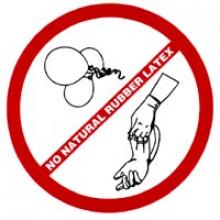
One of the most troublesome aspects of the condom use in the adult industry is the possibility of a performer developing a latex allergy. When some people hear the word allergy they think running nose, itchy eyes and some mild discomfort. However, an allergic reaction to latex, especially latex gloves and/or condoms is a much more serious allergy then just that. Quite honestly an allergic reaction to latex condoms/gloves can cause shock and even death. There are no studies pertaining to just latex condoms. The following article is based on exposure to latex and health care employees that wear latex gloves to prevent exposure to blood borne pathogens. However, certain parallels may be drawn.

The issue is so serious that OSHA has developed a Bulletin about exposure to latex ( Please see: http://www.osha.gov/dts/shib/shib012808.html ). Currently there are no federal regulations concerning latex gloves or condoms however twenty-five states, Puerto Rico and the Virgin Islands have all developed their own standards and enforcement policies for latex exposure.

Who is Allergic to Latex…

According to OSHA;

“With more widespread use of NRL (natural rubber latex) gloves after 1987 there was an increase in reported NRL sensitization and allergic reactions among patients and among employees, notably health care employees. In rare cases, these allergic reactions can be fatal…The majority of health care employees are able to use NRL products to care for most patients. However, some employees may develop sensitivity to NRL upon repeated exposure.”

An allergic reaction to latex condoms is actually something that can develop over time. A particular person may not be sensitive to latex at first but through prolonged and repeated exposures they may actually become seropositive for anti-latex antibodies. More disturbing is that it is currently impossible to determine who may or may not become allergic over time. According to OSHA;

“It is not possible, at present, to determine which employees will become sensitized or symptomatic on exposure to NRL allergenic proteins. Moreover, the extent of an individual employee’s reaction, or the length of time required for such allergic reactions to develop in a sensitized employee, cannot be ascertained. Finally, it is not possible, at present, to predict which individuals will progress from sensitization or from local contact urticaria to more dangerous allergic reactions, nor when this progression may occur.”

Typically, 1-17% of the population is sensitive to latex. Not surprisingly those that are exposed to latex on a regular and repeated basis, tend to be in the high range while the general population are in the lower range. Sensitivity has been found in;

“Health care employees particularly affected include operating room personnel, dental patient care staff, special-procedure and general-medical nurses, laboratory technicians, and hospital housekeeping personnel consistently exposed to NRL. NRL sensitization or allergic response or reaction has also been reported in greenhouse employees, hairdressers,doll manufacturing employees, and employees in a glove manufacturing plant.”

If condom use increases in the adult industry I am sure that “adult performer” will be added to the list of employees noted above. Based on the several studies it would be safe to assume that between 1-17% of all performers may develop a latex sensitivity from repeated condom use. Assuming there are 1500 performers that currently work in Los Angeles adult industry this condition could affect anywhere between 15 to 255 of the current performers (Please see: http://www.latexallergyresources.org/statistics ).

Symptoms of Latex Allergy/Sensitivity…

If someone is allergic to latex what are the symptoms that one can expect to experience ? OSHA has defined reactions into three categories;

“These categories include reactions that vary from localized redness and rash; to nasal, sinus, and eye symptoms; to asthmatic manifestations, including cough, wheeze, shortness of breath, and chest tightness; to in some cases, severe systemic reactions with swelling of the face, lips, and airways that may progress rapidly to shock and, potentially, death.”

The most basic reaction is contact dermatitis which OSHA describes as;

“The allergic contact dermatitis has an appearance similar to the typical poison ivy reaction, with blistering, itching, crusting, oozing lesions. Also, like poison ivy, this dermatitis appears 24-72 hours after the use of gloves or exposure to other sources of chemical sensitizers.”

Obviously, having blistering, oozing and itchy lesions on an adult performer’s genitals is something that doesn’t inspire thoughts of sexiness. And of course those performers will lose considerable income even waiting for the lesions to heal before trying to work again. However, the more important aspect to this issue is the very real potential thread of shock or even death within minutes;

“A type I reaction can occur within seconds to minutes of exposure to the allergen (in the case of NRL, to allergenic natural rubber proteins), either by touching a product with the allergen (e.g., gloves) or by inhaling the allergen (e.g., powder to which natural rubber proteins from gloves have adsorbed). When such a reaction begins in highly sensitive individuals, it can progress rapidly from swelling of the lips and airways to shortness of breath, and may progress to shock and death, sometimes within minutes.”

It is imperative that anyone in the sex worker community, not just those that perform in adult entertainment, be aware of latex sensitivity and allergies. I strongly recommend that everyone reading this article do their own research and talk to their own healthcare professional.

A great start place is at the website of the American Latex Allergy Association ( Please see: http://www.latexallergyresources.org/ ). I would also recommend visiting the U.S. Department of Labor’s website as well ( Please see: http://www.osha.gov/SLTC/latexallergy/index.html ).

There are options to using latex condoms. Non latex condoms are manufactured for those that are either allergic or have developed a sensitivity to latex. However, it should be noted that lambskin condoms do not contain latex but they are ineffective for stopping the transmission of the HIV virus. A non-latex Polyurethane condom must be used.


 

Condoms & The First Amendment…

Los Angeles County’s Measure B, the “Condoms in Porn” law, has caused much discussion in the media as well as the industry as to whether such a mandate is a violation of a performer and producer’s First Amendment free speech rights. Whether it is a violation of the U.S. Constitution will be left to the courts to decide. It is, without question, a law that can be challenged. The United States’ Constitution is the supreme law of the land. Which means no other law can violate the rights guaranteed by the Constitution – not even workers’ safety laws.

In regulating commercial speech the government has to show that condom law passes what is known as the Central Hudson test ( Please see: http://itlaw.wikia.com/wiki/Commercial_speech ). In regards to free speech and pornography, the United States’ Supreme Court has indeed ruled that hardcore pornography is legal and in fact is protected by the First Amendment and therefore entitled to protection under the Constitution ( Please see: http://en.wikipedia.org/wiki/Miller_v._California ).

Many have also questioned who holds such free speech rights – the producers or the performers ? The answer is that both producers and performers hold equal rights in that regard. Performers, like dancers in gentlemen’s clubs, do in fact express themselves while performing in an adult scene or movie. There are several U.S. Supreme Court decisions that hold a dancer’s nude dancing is in fact expressive free speech. ( Please see: http://en.wikipedia.org/wiki/Barnes_v._Glen_Theatre,_Inc. )

Can Free Speech Be Restricted ?

Commercial free speech can be regulated. There are two types of restrictions on commercial free speech, content and non-content based restrictions. An example of content based restriction would be a law that prohibited a newspaper from publishing the name of a rape victim. An example of a non-content based restriction would be zoning laws regulating the time, manner and place a business owner could operate a gentlemen’s club within a city or county. Content based restrictions require the court to impose a “strict scrutiny” test, meaning that the law has to promote a compelling governmental interest and it has to do so in the least restrictive means possible. For non-content based restrictions the court will used what is called “intermediate scrutiny,” meaning the law has to promote a significant, substantial or important government interest and it must be done in a way that is narrowly tailored to the governmental interest. Under intermediate scrutiny there are basically two tests the court uses 1) time, place and manner and 2) incidental, which means regulations that are aimed at conduct that is not speech but do infringe on speech.

A government mandated condom law would be a regulation that is not aimed at actual speech but rather conduct however it does infringe on the free speech rights of the producers and performers. In U.S. Supreme Court cases that have primarily been focused on gentlemen’s clubs, those looking to restrict nude dancing have used the argument that regulations imposed on them are merely trying to alleviate the “secondary effects” that gentlemen’s clubs supposedly cause such as crime, prostitution and blight on the neighborhood they are located in. I imagine that the government may also try to use a secondary effects argument in favor of the condom law, if it were ever to be challenged. I believe that they will claim that condoms in porn will protect the health of the general public since members of the adult industry will spread disease to those in the general public. Whether this argument will work is unknown.

None the less, a government mandated condom law is a restriction of free speech of both performers and producers. Since it is not content based, if challenged in court, it would receive intermediate scrutiny and the court would examine whether the government has a significant, substantial or important governmental interest and whether the law is narrowly tailored to those goals.

Therefore the question will be is the health and safety of workers in the adult industry a significant, substantial or important governmental interest. And if so, is the condom law narrowly tailored to promoting that goal. In other words does the law restrict the least possible amount of speech to accomplish the goal of protecting adult industry workers.

More than likely the courts will find that the health and safety of adult performers are an important governmental interest. The argument on behalf of the industry would probably be that STI testing achieves the same goal of the condom mandate without restricting any speech.

The industry could also make the argument that only the state of California has the ability to regulate workplace safety and therefore the law exceeds the power of Los Angeles County or any city that adopts a similar law such as the City of Los Angeles Safer Sex in Adult Films Ordinance.

In the coming weeks I will be writing more on this subject. However, if you are interested in this issue I suggest that you do some research and educate yourself. Especially if you are a producer or performer in the industry. You might be interviewed by someone in the media in the coming weeks as Election Day approaches.

A good starting primer on First Amendment issues is attached to this article. It was written by an attorney for the Congressional Research Service in October 2009. It basically states how the government can regulate free speech and how it needs to go about doing it. Its an inside look inside their “playbook.”

FreeSpeechPrimer


Privacy & Porn: Is Free Internet Porn Really Free ?

On May 26, 2012 a new privacy directive for online business, specifically aimed at the use of cookies on websites, went into effect across the European Union. That directive has not been adopted in the United States though. Over the past 5 years there has been a marked increased in the use of cookies by large websites to track surfers as they move across the Internet as well as to collect personal information for advertising purposes. Many feel as though the insertion of cookies onto a surfer’s computer without their consent is a violation of that surfer’s privacy. Others (mostly companies, advertisers and websites) feel as though that cookies enhance a users experience online and make it easier for websites to serve up information and ads that the user would be interested in receiving.

By now you may be asking what is a cookie. A cookie is a small text, flash or HTML5 file that a website can insert into your computer when you visit that website to help keep track of different things, like if you want to stay logged into a website, or your preferences within a website. Cookies are also used for advertising purposes. As a surfer travels across the Internet and clicks on different ads, visits certain sites and searches for different items cookies are there to record and relay this information to different ad servers. Many cookies relay information to are the owners of the websites the surfer is visiting. The website may insert their own cookies to enhance the surfer’s experience on their website. And for the most part without those types of cookies browsing the Internet would be much more difficult. However, there is also what is called third party cookies.

Third party cookies are usually for ad tracking and data mining purposes. Website A will sell third party cookie placement to Advertiser B. Advertiser B wants to track you everywhere you go to serve only certain advertisements to you as you surf. Based on the cookies you pick up along your surfing this will tell Advertiser B what you like to watch, where you live, how much you make, what you do for a living – basically gathering as much personal information as possible. This is where the real money is in advertising – targeted ads. So when you visit Website A they insert a third party cookie onto your computer for Advertiser B to track through an ad server. For this Advertiser B pays Website A a fee. Obviously the more visitors Website A has the more money they will make from Advertiser B. (Please see http://lifehacker.com/5887140/everyones-trying-to-track-what-you-do-on-the-web-heres-how-to-stop-them ). To make real money from this online you need a huge social network like Twitter or Facebook or you need a huge network of sites that surfers visit daily. Individual websites do not have the traffic to monetize this type of advertising.

According to Alan Henry of LifeHacker.com, “If you’re not paying for a service, you’re the product, not the customer.” In the world of free Internet porn, YOU are the product. More specifically your information is the product and its being data mined and tracked. Many are aware of the privacy concerns swirling around social media sites like Facebook. However, no one stops to think that this may also be an issue with your favorite free porn tubesite. Many of the larger porn tubesites have enormous amounts of daily traffic. Millions of people visit these sites collectively each day. Not to mine & track those visitors would be economically shortsighted for those tubesites.

Remember, there is no free lunch. Google hasn’t become of the most powerful companies in the world by supposedly giving away the farm for free. Have you ever once wrote a check or made a credit card payment to Google ? Probably not. If most of their services are free so how do they make money? According to Matthew Yglesias of Slate.com (Please see http://www.slate.com/articles/business/moneybox/2012/03/apple_vs_google_the_war_over_third_party_cookies_.html )

Google is not a charity, but it has built a remarkably successful company by giving products away for free. It’s a minor miracle that the best search engine, the best Web browser, the best email client, the best map software, and the world’s most popular mobile phone operating system are all made by the same company and available to the world free of charge. That’s not corporate beneficence: It’s the fruit of Google’s hunger for data, but it tastes sweet just the same.

Few ever think about the information they are giving to Google to resell each and every time they perform a search, look for an address on Google Maps or use their GMail account but that is exactly what is happening. Almost no one thinks about the information they are providing to their favorite free porn tubesite with each masturbatory session spent surfing through your favorite videos. No one stops and thinks, how can all of this great porn be free just as no one thinks how Google can provide what they do for free.

In the days long ago porn consumers were afraid of going into an adult store for fear they might run into someone they knew. Porn aficionados would lock away there “stash” in a closet or under a bed to keep their contents secret. In the world of Internet porn there is no anonymity. It is very difficult to secretly surf your favorite sites. Every click, every visit, every download is being monitored and tracked somehow. The users of BitTorrent sites are finding out that fact the hard way by being named in copyright lawsuits across the United States. Some estimates indicate that more than 250,000 porn downloaders have been sued in a last couple of years.

So how can you check to see if your favorite free porn tubesite or even paid membership site has third party cookies embedded into it ? That is fairly easy to do. There is a site called CookieCert.com ( http://www.cookiecert.com ). You can search just about any website on CookieCert. As an example I decided to check Playboy.com, one of the best know adult brands in the United States ( http://www.Playboy.com ). According to CookieCert.com, Playboy.com has a cookie score of 1 out of 5 stars. Their verdict is that Playboy.com is a site you should keep away from. Their “cookie audit” revealed that there were 17 permanent first party cookies and 12 third party cookies that were inserted into a test computer when they visit Playboy.com. Of these 12 third party cookies most are from a company called Pointroll.com ( http://www.pointroll.com ). Pointroll is a Gannett Company. You might have heard of Gannett before. You might have actually seen their billboard ads next to a highway. Well, Gannett is also in the online advertising business. From Pointroll’s About Us page;

Founded in May 2000, PointRoll, a Gannett company, has been instrumental in the evolution of digital engagement, pioneering technology including the expandable banner ad, in-banner video, and numerous technologies that enabled marketers to create, deliver and measure display ads as rich and full featured as a microsite without disrupting the user experience. Powering 55% of all rich media campaigns online and serving over 450 billion impressions for more than two-thirds of the Fortune 500 brands, PointRoll delivers results.

According to Pointroll.com, “as the digital landscape evolves, campaigns are becoming less about places and more about people – where to find the right audience and engage them across online, mobile, and other devices and platforms.” As Alan Henry said you are the product. Further, if you believe that Fortune 500 companies will not partner with porn companies you may want to think again.

Now that it is obvious that Playboy.com has third party tracking cookies the question becomes – so what ? Does Playboy.com mention cookies in there Privacy Policy ? Yes they do. Do they mention third party cookies ? No, they do not. Here is their Privacy Policy http://www.playboy.com/privacy-policy. However, in all fairness, legally they do not have to. However, on Playboy’s German based site, Playboy.de, they are required by EU privacy laws to disclose such information. Here is the third party cookie information from Playboy.de ( http://www.playboy.de/ ) which can be found at the very bottom of the footer by clicking on this link Über unsere Werbung ;

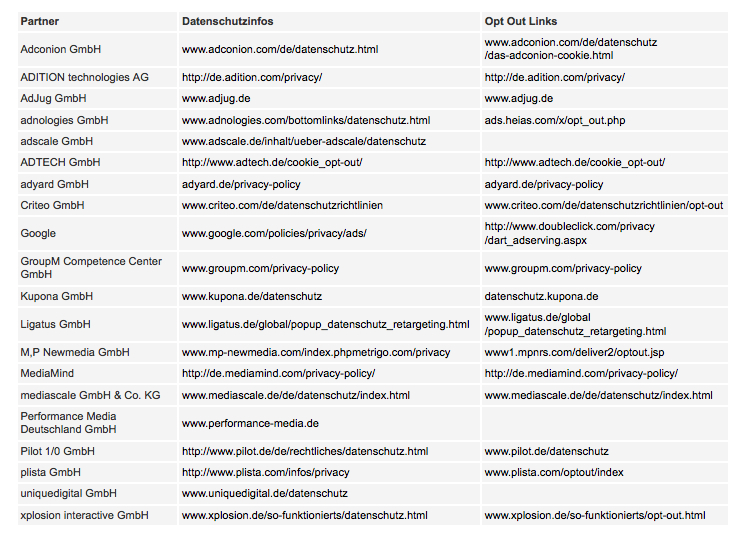
Data collection of other service providers in usage-based online advertising

In order to optimize advertising to you based on your user interests, we have allowed these other companies to collect usage data. On the websites of these companies for more data protection information to the respective offer:

As you can see third party cookies and mainstream advertising are now very much part of the acceptable business model of porn in the United States. And while the European Union may have passed a new stringent privacy law we have yet to do so here. You as an American have much less privacy rights online then surfers in most of the other developed countries in the world.

So the next time you are surfing your favorite pornsite or tubesite you may just want to consider who’s watching you as you’re getting off to your favorite adult star. Big brother is watching and he likes porn. Make sure you read the Terms of Service and the Privacy Policy of the adult sites you visit and if that site has a European counterpart – read their Privacy Policy as well. It might surprise you to see who’s cookies are being inserted into your computer.

For more information on third party cookies you can visit http://www.allaboutcookies.org/privacy-concerns/

If you want to remove third party cookies from your computer and prevent them in the future you can visit http://www.allaboutcookies.org/manage-cookies/

Returning to Work ? Somethings You Should Know…

September 3, 2012, Labor Day, ironically, is the day that the FSC/APHSS has determined to be the best day to return adult performers to a regular production schedule, a mere 10 days after receiving a prophylactic antibiotic shot to hopefully cure the syphilis outbreak in the industry. Now that the moratorium on production has been lifted, be safe and here’s some facts that you should know before you head off to set;

  • There are 9 performers in adult confirmed positive for syphilis as of today;
  • Syphilis may take up to 90 days to detect through testing with the average range being 21 days;
  • Once you test positive for syphilis you may always test positive for syphilis;
  • If you are receiving your test results through APHSS you may not know that you are working with another performer that previously tested positive for syphilis – the APHSS database only tells you whether someone is “cleared” to work;
  • There is a disagreement between APHSS and TTS as to the proper test to use to detect syphilis;
  • APHSS states that their required and mandatory re-test can detect syphilis at 14 days while TTS states two tests are necessary to detect it this quickly.
  • Only 300 performers opted to take the antibiotic shot;
  • Despite the moratorium on production, there were some production companies and agents that continued to book scenes;
  • Some performers continued to escort during the moratorium;
  • Condoms may not protect you from catching or spreading syphilis;
  • Treatment for syphilis may make birth control pills ineffective;
  • Often those with syphilis do not show any symptoms of the disease;
  • In the primary and secondary stages syphilis is very contagious;
  • If a performer’s off camera sex partner(s) were not treated it is possible to reinfect those that were treated;
  • An antibiotic shot is not a vaccine and a performer can be reinfected quite easily;
  • If you catch syphilis, receive treatment and then get reinfected it will require 1 shot a week for 3 weeks to cure it;
  • Having an open syphilis sore makes it 2 to 5 times more likely that you can transmit/contract HIV during sex.

If there are any facts I have let off this list please feel free to add a comment to this article and I will add them to the list.

Porn 101: Should I Trademark My Name ?

This is the second in a continuing series of articles about talent protecting their most important intellectual property, their stage name. In “Choosing Your Pornstar Name” ( https://adultbizlaw.com/?p=547 ) I discussed how to choose the best stage name possible. In this article I will discuss the importance of securing a trademark for a performer’s stage name.

There are three types of trademarks in the United States, common law trademark, a state trademark and a federally registered trademark. It is rather easy to get a common law trademark – it just requires the use of  that stage name in commerce – meaning once a performer opens a for-profit website with it and/or just starts using it as their stage name when they are booked into scenes and paid for those scenes. Commerce means the performer has to be using the name to make money. Unfortunately, a common law trademark is rather weak when it comes to protecting a “brand.” Common law trademarks are usually restricted to geographical locations and the industry the name is used in. For instance if you choose “Suzie Suckems” and use that name as your stage name you do have a common law trademark in “Susie Suckems.” Your common law trademark for your name will probably be restricted to the geographically area known as Los Angeles county (if you perform and live there). Also, you would probably only be able to enforce that common law trademark against another performer using the stage name “Susie Suckems” only in Los Angeles county and only as a stage name. Anywhere else the other “Susie Suckems” could use that name as a stage name and you would be unable to prevent her use of it. For instance, if the other “Susie Suckems” traveled to Florida to shoot she could certainly use it there.

A performer can also file for a state trademark, however I have never heard of anyone securing a state trademark. I do not believe that a state trademark provides any advantage over a federal trademark. I would never recommend that a performer-client register a state trademark before attempting to secure a federal trademark. Federally registered trademarks provide much more protection then a state trademark. Therefore, I always recommend that performers secure a federal trademark first. However if you would like to research California state trademarks you can find more information here -> http://www.sos.ca.gov/business/ts/

If you would like to research other state trademark laws you can go here -> http://www.uspto.gov/trademarks/process/State_Trademark_Links.jsp

If a performer does decide to trademark their stage name this is a relatively easy process for an experienced trademark attorney, though it does take a rather lengthy amount of time. Most performers think that once the trademark fees are paid and the paperwork is filed that is all that is necessary and they immediately have their trademark. That is not the case. It can take up to a year or longer to secure a trademark. It is a detailed process and often performer’s stage names are challenged or rejected depending on what the name is or how the trademark description is written. While it may seem easy, it can get complicated if the USPTO’s (United State Patent and Trademark Office) attorneys require additional information or issue office actions against the registration.

A performer can certainly file their own trademark. For more information on how to do so you can look here -> http://www.uspto.gov/trademarks/process/index.jsp

What many performers do not understand is that usually multiple trademarks need to be filed depending on what uses the performer wants to protect. For example, one trademark in Class 41 will not protect that stage name for the use on t-shirts. The manner in which a trademark operates to protect a brand is that a company or performer has to register that trademark for each use that want to protect it for. Quite simply, to protect their stage name on the Internet would be one registration. To protect that same stage name for a line of t-shirts that would be an additional filing. If the performer wanted to protect a wide range of uses many filings would be necessary. For example, the owner of the mark “Fifty Shades of Grey” has filed the following trademarks;

Word Mark FIFTY SHADES OF GREY
Goods and Services IC 003. US 001 004 006 050 051 052. G & S: Soaps; perfumery; essential oils; cosmetics; preparations for the hair, skin, body, face, hands and feet; depilatory preparations; exfoliating preparations; shaving preparations; waxing preparations for the removal of hairIC 004. US 001 006 015. G & S: Candles and wicks for lighting; scented candlesIC 006. US 002 012 013 014 023 025 050. G & S: Goods of common metal; handcuffs; shackles; karabiners; metal grids; metal chainsIC 009. US 021 023 026 036 038. G & S: Recording discs; compact discs; DVDs and other digital recording media; tapes; recording discs; sound recordings; video recordings; recorded films; electronic publications; sunglasses; mobile phones; mobile phone accessories; mobile phone applications and softwareIC 010. US 026 039 044. G & S: Sex aids including ropes; marital aids; benwa balls, being adult sexual aids; adult sexual stimulation aids; vibrators; condoms; massage apparatusIC 014. US 002 027 028 050. G & S: Jewellery; costume jewellery; clocks and watchesIC 016. US 002 005 022 023 029 037 038 050. G & S: Paper, cardboard and goods made from these materials; printed matter; photographs; stationery; calendars; postcards; greetings cards; books; magazinesIC 018. US 001 002 003 022 041. G & S: Leather and imitation leather and goods made from these materials; animal hides; trunks and travelling bags; handbags, rucksacks, purses, wallets, holdalls; umbrellas; whipsIC 020. US 002 013 022 025 032 050. G & S: Furniture; mirrors; picture frames; articles made of wood, cork, reed, cane, wicker, horn, bone, ivory, whalebone, shell, amber; mother-of-pearl, meerschaum or plastic; garden furniture; pillows and cushions; mugsIC 024. US 042 050. G & S: Textiles and textile goods; bed and table covers; rugs; duvets; covers for pillows, cushions or duvetsIC 025. US 022 039. G & S: Clothing; footwear; headgear; lingerie, men’s underwear, hosiery, bathing costumes; dressing gowns; nightwear; costumes for use in role-playIC 028. US 022 023 038 050. G & S: Games and playthings; soft toys; playing cards; boardgames; gymnastic and sporting articlesIC 033. US 047 049. G & S: Wines; spirits and liqueurs; alcopops; alcoholic cocktailsIC 034. US 002 008 009 017. G & S: Smokers’ articles; matches; lighters for smokersIC 041. US 100 101 107. G & S: Education services; entertainment services; party planning; arranging of parties; hosting social entertainment events; production of films; sporting and cultural activities; arranging of conferences, seminars and symposiumsIC 045. US 100 101. G & S: Marriage guidance counselling; personal relationship consulting


You can see that the owner of the mark wanted to protect their trademark for all possible uses, not just for a book or movie. More than $5,000.00 was paid just in registration fees for all of those uses in addition to the actual attorney’s fees paid for each filing. I often caution performers from trying to file too many registrations at once. It is often better to secure the main use first and then move towards additional uses as business opportunities allow. Otherwise it may be a rather expensive experiment to determine whether you can even secure the trademark for the first use.

For example, if your performer name is “Trixie Minaj” you may have difficulty in securing even the first trademark. Especially, if you have given interviews early in your career that you picked that name because people told you that you look like “Nicki Minaj.” The way the trademark process works is that once your trademark is filed it is reviewed within a couple of months by the staff attorneys at the USPTO. If all of the forms are properly filled out and the necessary samples of the use of the stage name are properly submitted your trademark will eventually be published for opposition. Which then means anyone can object to your trademark, if for some reason, your trademark is too close or infringes on their intellectually property. In this example, you can be assured that Nicki Minaj has attorneys that do nothing more than watch to see if anyone has tried to secure a trademark using her name. Once they do find it you can assume they will object to your trademark. If you have filed your trademark request in 10 different categories for 10 different uses you will probably lose all of those filing fees as well as the attorney’s fees paid on those trademarks. Thus, I always recommend that a performer try to get just one trademark first and then expand.

You might be asking why do I need a trademark anyway. In the realm of porn and pornstars the most common benefit of having a trademark is preventing others from securing domain names using a performer’s stage name. For example, if a you had a trademark on your stage name “Susie Suckems” you could force anyone using the name “Susie Suckems” in their website domain name to turn that domain over to you. If you had to purchase the domain name “www.SusieSuckemsXXX.com” because someone else was already using the domain name “www.SusieSuckems.com” for their website and they were posting photographs and videos of you on it you could then legally challenge their ownership of that domain name. Now if the other “Susie Suckems” was a country singer and her website had her music on it then you would probably not be successful since there would be no reason for a potential fan to confuse the country singer Susie Suckems and the pornstar Susie Suckems. The legal theory behind trademarks is to prevent potential fans/customers from confusing two marks in different industries. For example there are several companies legally using the trademark “Delta” in their names – Delta Airlines, Delta Faucets and Delta Dental. Obviously, the reason for this is that they all use the name Delta in different industries and there is little chance that people would think that Delta Airlines are now manufacturing faucets or filling cavities.

If there is a chance of consumer confusion between a performer and the person or company using their domain name there are two challenges that could be filed. The first is a UDRP action which is where a performer can file a request with the company that runs the assignment of domain names (ICANN) to have that domain name transferred back to that performer from the person that is using it without their permission. That person would have the opportunity to tell ICANN why they believe have rights to use the performer’s trademark in their domain name. If ICANN decides in the performer’s favor they have the power to simply seize the domain name and return it to that performer.

If the person or company is using a performer’s domain name for a membership website and is making money from off a performer’s trademark he/she can file a trademark infringement lawsuit against that person or company. A trademark lawsuit is much more expensive to defend for the person or company using the trademark. That alone may force them to turn over the trademark to the performer and if warranted, pay money as part of the settlement. Many infringers do not want the expense of litigation to try to keep a potentially domain name. However, be aware that with a UDRP action the performer only gets the domain name back. They do not get any monetary damages. Trademark lawsuits are complicated and can get rather expensive very quickly. I usually recommend that for domain name issues that most performers seek to have the domain name returned to them using the UDRP action option. It is much less expensive and much quicker.

Trademarks and protecting a performer’s stage name is vital to his/her long term success in the industry. It is what uniquely identifies a performer and is often “highjacked” by others looking to cash in on your success. It is strongly recommended that all performers seek out legal counsel and additional advice as to trademarks and their stage names. Failure to do so will ultimately cost that performer money and may result in others profiting where they shouldn’t. This discussion is much more complex that what I have touched upon in this article. A complete discussion of trademark law would require volumes.


Is There a Hole in APHSS ?

The syphilis outbreak in the adult industry has brought to the forefront a highly contested debate as to testing for sexually transmitted diseases. Currently there is a debate as to whether there should be one testing facility or multiple facilities. There is also a debate as to what the proper protocols should be for informing performers and their sex partners of a possible outbreak. There is yet another debate as to whether what exactly should a performer know about his/her costar on set in regards to their medical history.

Background…

The main players in this debate are the testing facilities under the umbrella known as the Adult Production Health & Safety Service (APHSS https://aphss.org/ ). APHSS is the brainchild of the Free Speech Coalition (FSC http://www.freespeechcoalition.com/ ) and several major content production studios that openly support the FSC, most notably Manwin, Evil Angel, Kink.com, Girlfriend Films, Gamma Entertainment and Vivid Entertainment. One of those APHSS testing facilities is Cutting Edge Testing, which is owned and operated by Dr. Miao, and is one of the main testing facilities in Los Angeles for the industry. (CET http://cuttingedgetesting.com/ ).

On the other side of the equation is Talent Testing Services (TTS http://www.talenttestingservice.com/ ), a testing laboratory not a medical clinic, which appears to be supported by LATATA ( http://latata.org/ ). The Licensed Adult Talent Agency Trade Association is comprised of several of the licensed and bonded adult talent agents within the United States. Further, TTS is not part of the APHSS system and it appears does not wish to be. TTS is not a medical facility it is a laboratory that performs testing for sexually transmitted diseases.

APHSS’s inception is rather recent, only occurring after Adult Industry Medical (AIM) closed and filed for bankruptcy within the last year. TTS has been in operation for several years.

As for adult performers, they seem to be split as to which testing facility they prefer. Some prefer CET and the APHSS system while others prefer TTS.

Medical History within the APHSS Database…

Without getting into extreme detail as to either service or all that either service offers, since that would require pages of analysis, I would like to confine my discussion to one potential problem with the APHSS database I have been made aware of by seasoned veteran performers.

Since I prefaced this article with the words “hotly debated” let me state this for my readers. I do not have a financial interest in either testing facility. I do not have a preference as to either testing facility. I am not a performer nor a producer and therefore do not have a “dog in this hunt” so to speak. I am neutral as to both facilities so please do not attack me believing this article is merely an attack on APHSS. It is not. It is merely meant to inform and educate based on a potential issue I see with the way medical history is handled in the APHSS system. My goal is that this issue can be resolved and the database improved for the health, safety and knowledge of the talent.

After a discussion on Twitter with Fabian Thylmann it became apparent to this writer that there is a potential hole in the APHSS database as to the past medical history of performers. I have come to this understanding after the conversation with Fabian Thylmann as well as personally attending the APHSS presentation in July conducted by the FSC and Dr. Maio. I will limit my discussion to just one issue. That issue is how past medical history is handled by APHSS.

From my understanding the performers in the APHSS database will be either “cleared” or “not cleared” to work under the APHSS database and call in system. Which means that only the most recent test results will be available to be reported and only in the way proscribed. Which, for legal purposes, is a good idea with the issue of medical privacy being important to so many. As a lawyer, I like the APHSS database. It leaves little room for violation of medical privacy.

However, from my discussions with some veteran performers it appears that there are a contingent of them that would like to know more about their on-screen partner’s medical history, including whether they have tested for syphilis in the past. While normally I would disagree with that position as for chlamydia and gonorrhea I do see that information as being important for syphilis. Syphilis is an infection that can be easily cured but may always result in some level of a positive finding on a sexual transmitted disease test result, depending on the test used. (Please see http://www2a.cdc.gov/stdtraining/self-study/syphilis/syphilis10.asp ). Therefore, I can certainly see a performer’s right to make an informed decision. While medically it may be impossible to transmit the disease once a performer as undergone treatment some performers feel as though that they would like to know that information prior to performing in a scene with previously positive performer. A balance between privacy and informed decisions must be made.

From what I was told by Fabian Thylmann of Manwin, a performer who has tested positive for syphilis will be cleared for work within the APHSS database once they have been examined and cleared by an APHSS physician. Therefore, while we do not know at this time who besides Mr. Marcus may have it,  based on Fabian Thylmann’s statement it is possible that at some future point a performer that had syphilis and received treatment will be actively performing again. With this potential hole in the APHSS system anyone working with that performer would not even know about the past positive history for syphilis.

While this might not present much stress for some performers it may for others. I discussed this issue with a male performer that indicated that he did not believe that working with a performer who had previously tested positive for syphilis but is now cured posed much of a risk. However, he did indicate that information would be desirable in order to make an informed decision. Performers should be able to assess risk and balance such concerns themselves.

I had suggested to Fabian Thylmann of Manwin that the APHSS database be changed so that it would instead read “cleared for work” however with a notation. That notation in the database could be an indication that the other performer may have tested positive for syphilis within the last 30, 60, 90 or 180 days depending on long ago the past the positive test occurred. That may allow a performer to make a more informed decision as to who their screen partners will be.

This hole in the database may also become more important in the future if testing is going to expand past the basic HIV, chlamydia, gonorrhea and now syphilis panel. If the industry adds herpes, hepatitis and human papillomavirus to the regular testing panel how is the APHSS database set up to handle those types of results. Are all performers that test positive for herpes going to be “cleared to work” without a notation that they carry the virus ? As with syphilis is an APHSS doctor going to examine them for the presence of an outbreak before clearing the performer to work ? How often will this exam be necessary ?

Will there be a notation in the APHSS database for those performers that have had a hepatitis B vaccination ? Will a performer know if they are working with someone else who has been vaccinated ?

Since this database is being touted as the database for the entire industry, lets not forget the gay side of production as well. There are gay production companies that allow HIV positive performers to work with other HIV positive performers as well as HIV negative performers ( See http://www.insidesocal.com/outinthe562/2010/11/hiv-positive-gay-porn-actor-signs-exclusive-contract.html ). Some of those studios even match performers with different strains of HIV together. How would this particular situation be handled by the APHSS database and call in system ? Would an HIV positive performer working for a gay production studio “not be cleared for work” or would they. Would a notation be required on that performer’s database file ? Or is APHSS simply not going to allow gay performers and production companies into their database ? That cannot be possible since APHSS has under it’s umbrella of testing facilities a clinic located in San Francisco. There are also straight porn production companies such as Naughty America that are now also producing gay content ( See http://queermenow.net/blog/naughty-america-presents-3-new-gay-porn-sites/ )

Needless to say, the syphilis outbreak has caused numerous questions to be asked in regards to the current state of testing and performer health and safety as well as the mandatory use of condoms now required by state law and Los Angeles city ordinance. Without doubt this issue will continue to be debated, lines will be drawn and sides will be taken. Let us not forget those in the middle of the fire, the performers who risk their health every time they step on set to perform.

Knowledge is power. If you believe I am mistaken in the way medical history will be handled by the APHSS database I invite you to post a comment. Any inaccuracies will be corrected.

Syphilis & You – Part 2

(Note: This article may be considered basic information for some in the industry) I suspect that this work stoppage may continue for more than the 10 days then most people are expecting. If the United States’ outbreak is anything like the outbreak in Europe, the industry might have to close for another 60-90 days. Also, some performers that have refused the penicillin shot will certainly have to wait 90 days to resume work. Most people I have talked to are in a relative panic already do to the downturn. How can talent and producers survive an extended period of not producing content ?

New business models will have to be explored and boundaries might have to be expanded for both producers and performers. I have numerous clients in the fetish side of the market, however, many hardcore sex performers and producers rarely try out these other avenues of revenues. Clips4Sale.com ( http://clips4sale.com/do/list ) is one site that can be easily mined for revenue, even with existing content including boy-girl. They have more categories of different types of fetishes then I can possibly cover many of which do not require any type of sexual interaction between performers. There are other downloadable clips sites other then Clips4Sale as well. I have known producers and models that have earned several thousand dollars a month from a successful store on Clips4Sale.

If you are “sitting” on scenes, now would be the time to edit those and start making money from that content. As a performer or producer you can easily have a store up and running in as little as a day. Promoting that content on Twitter, Facebook and other social media sites would naturally drive traffic to your store.

Now is also an excellent time to learn and understand affiliate marketing in porn. As a performer you probably have appeared in dozens of scenes. It is time that you earn affiliate referral income from those scenes. Most large pornsites, including Manwin, BangBros and Naughty America will let you sign up and promote your own scenes. Once you sign up as an affiliate you will be provided a link code. You can use that link code on Twitter, Facebook or any other social media sites to push traffic to your scenes. If one of those people that click on your link signs up for the website you are promoting you will receive a cut of the membership fee. You can usually choose a larger one time payment or up to 50% of the total membership price paid for each month the person you referred remains a member. Most choose the one time payment since it is a larger amount and many people unsubscribe from a pornsite within the first 30 days and few actually rebill and continue their membership.

Another way to harness the power of your fan base is to link your Twitter page to an Amazon Wish List. I am not really sure why expensive gifts are necessary during a work stoppage however one producer suggested that performers should ask their fans to buy them Target or Ralph’s gift cards in order to buy food and basically necessities. (Note: Personally I do not like the idea of Amazon Wish Lists but I would be remiss not to mention them in this article.)

If you are a performer you may also want to finally consider starting your own membership website. However, that is a long range project that can be expensive to begin so it might not be within everyone’s budget right now. However, those performer’s and content producers that do have their own websites will have a much easier time during a period of work stoppage.

As a female, it is much easier to survive a lengthy work stoppage then male talent or even a small producer. For women, there are numerous opportunities to earn income without having to perform in a sex scene with a partner. The obvious is that a female performer can still shoot solo scenes. As discussed earlier this might also be a good time to explore possibilities as a fetish performer. Many fetish shoots do not require sex or even nudity. Not every fetish producer is Kink.com. Some fetish producers will shoot foot, leg, smoking or even small penis humiliation videos.

Another possible source of income for female (and male) talent is webcamming. If you aren’t webcamming yet I strongly suggest that you try it. Sites such as Streamate.com, ImLive.com, Naked.com and MyFreeCams.com seem to be the most popular now but there are dozens of others. Some webcam models can earn thousands per week on webcam. Even earning a few hundred a day should keep the rent and utilities paid each month if this shut down extends beyond 10 days. You will need an Internet connection, a computer with a webcam and a room where you can webcam and not be disturbed during the show. You can literally sign up in the morning and be approved by that night and start earning money. You might want to sign up for several sites and log in to different ones to test the traffic and earning opportunities. Again Twitter can be a way to announce your shows and to drive traffic to your camshows.

Of course there is the old pornstar standby – dancing at a strip club. Depending on where you live there might even be one close to your house. As a performer/pornstar it might be easy to get hired. You would be a natural “draw” for the club since they might not have any other performers/pornstars dancing there already. You can usually complete all the necessary paperwork within a few hours and be on stage as quickly as the same night. Las Vegas is always a favorite destination of most pornstars to dance. There is usually more money to be earned in Las Vegas as a dancer then almost every other city. Even in Los Angeles, it is often better to travel to Las Vegas to dance then try to dance in a local club. However, in Las Vegas your expenses including stage fees will be higher especially if you also have to pay to get there and for a place to stay once you do. However, with football season returning and summer ending Las Vegas should get busy again once the seminar and conference season starts in late September. Again, using Twitter and Facebook may draw fans to your performances.

For male performers it is a much different situation, unless of course you are comfortable with webcamming for other men (there might be some female clients but not likely) and/or doing fetish shoots. Usually, though in fetish shoots, the male talent tend to be submissive to the women when the scene does not involve sex. If male talent doesn’t mind being tied up and whipped, for example, there is still money to earned as a submissive model in fetish shoots.

If male talent has the body and can dance, he can try to join a male review. However, I suspect it is much more difficult for a man to break into that particular industry. There are less male shows, even in Las Vegas, then female only strip bars and the number of performances is also greatly reduced.

A male talent does have numerous contacts with female performers though, as do producers. It might be an opportune time to start a webcam studio for solo girls. If you have the equipment for production you then also have the equipment to set up a small webcam studio and begin broadcasting through one of the many camsites list above. How you set up paying talent is your choice. Most pay the female performers a percentage of what they earn during the show while others pay the female performers a flat rate or even hourly. Managing a webcam solo girl webcam studio may not be terribly exciting for male talent but it is a way to earn income during a work stoppage. Please also be aware of possible film permit laws in regards to operating a webcam studio though.

Whichever path you choose you can earn income during any period of work stoppage. It is time to stop depending solely on getting booked for shoots and take responsibility for generating your own income. Many performers spend hours on Twitter developing followers that far exceed even movie and television stars. It is time you harness that “star power” and generate your own income and be independent. If you can survive a work stoppage in the industry you can not only extend your career, you can become more “picky” about your scenes as well as take time off for your own personal reasons.


Syphilis and You – Part I

I usually try to remove my personal thoughts and prejudices from this blog and desire it to be more legal and factual in nature. However, in light of what is happening not only in the United States but also Europe in regards to syphilis I do not believe that I can. Too many of my friends, not just clients, are caught up in what could end up ruining their lives, businesses and careers.

I had a conversation two nights ago with a client and friend that perhaps I was too difficult on since I held a bright-line approach with him as to when he should return to performing as well as producing. It is always much easier to play quarterback from the sidelines then it is from the actual game. And I am not IN this actual game. I do not sacrifice my body on camera nor do I have to worry about my hired talent on set contracting syphilis or any STD for that matter. I am not a producer nor talent.

He was gracious in explaining the everyday situations he finds himself in a much diminished industry trying to do what he feels is the “right thing” while being able to pay his bills. I certainly cannot fault him for such. It is a difficult decision that producers and talent have to make as to when to resume shooting.

It appeared, at least to most, that the most turbulent part of the storm had blown over when the FSC ( http://www.freespeechcoalition.com ) had made the announcement that Manwin and several other producers would provide a prophylactic antibiotic shot to talent for free so they could return to work 10 days after receiving the injection. Hundreds of performers lined up to get the miracle drug called penicillin. Then two days later Rocco Siffredi dropped a bombshell interview on XBiz Magazine, wherein, he claimed that 89-100 performers through-out Europe now have syphilis and the number may be rising. ( http://www.xbiz.com/news/153188 ) He also went on to state that Europe is now under a 60 day moratorium and production has ceased. Cases have been reported in Budapest, Prague and St. Petersburg. St. Petersburg may have had the earliest reported cases starting in as early as May 2012. (Note: This information was provided by Fabian Thylmann of Manwin) His comments left most of the US industry wondering how and why this happened.

It appears for all intents and purposes that the European performers were also receiving antibiotics as well. Therefore, how could 16 cases explode into 100 cases in a short 2-3 weeks. I do not know if anyone has the answer to that particular question nor do we in the US know that there is a confirmed count of 100 cases in Europe. I have no reason to doubt Siffredi, but his comments cannot be viewed in a vacuum. He might be incorrect. However, he seemed to blame performers that also escort as a reason for the increase in cases, at least outside the industry. He also discussed that fact that some talent in Europe also altered their tests to allow them to continue to work as Mr. Marcus did here in Los Angeles. However, he did not seem to have an answer as to how the number of cases had risen in Europe so dramatically in a few short weeks.

In the United States, an accurate count of the number of positive cases remains a mystery. It could be 2, 5 or even as high as 9 as reported by the Los Angeles County Health Department (LA County Health receives all reports of STDs within the county as required by law). Which of those cases are from within the industry and how many are outside of it. The simple answer is that no one knows for certain at this point.

Unfortunately, many performers within the Los Angeles industry continue to work despite the moratorium. I even heard that one male talent has said that the syphilis outbreak has been a “goldmine” for him since he was one of the few male performers still willing to work. I have also heard reports of agents continuing to book talent for scenes and even charging them “kill fees” for refusing to perform. Which obviously means there are at least a handful of companies that are still producing. As my friend and client indicated, people have to eat and pay bills. Many performers and producers do not have a cash reserve that will allow them to survive even a 10 day stoppage no less the 60 days that is now affecting our European counterparts. Further, producers for some large internet websites and tubesites do not have enough content in reserve to allow them to stop producing. Websites must be continually updated for the members so they continue to rebill.

This has left me wondering whether the US, and more specifically the Los Angeles, market is about to experience a dramatic rise in the number of cases or has this outbreak been contained by the prophylactic antibiotic shot provided to some performers for free. Some performers have opted not to take the shot and would rather wait 90 days for three clean syphilis tests to continue working. Either way, we are, without question, in a wait and see period. The latency for a positive finding on a syphilis test can indeed be as long as 90 days though it usually shows up on a test within 20-30 days. I am unaware of any tests that can show whether a performer is positive or negative for syphilis in as little as 10 days. (Note: Fabian Thylmann of Manwin provided that there is no test that can accurately detect syphilis at the 10 day mark however it is his opinion that if treated and caught early a performer should be allowed to return to work.)

So where does that leave the US talent pool as well as the producers ? At this point, in my opinion, lost and confused. I have received numerous calls in regards to when production should resume. No one seems to have a clear answer to this question since the answer would depend on your ability to handle risk. Obviously, the sooner you return to production the higher risk you might have of contracting and spreading syphilis. The longer you wait the more the risk diminishes – or does it ? Perhaps not, if some talent and producers continued to work during the moratorium. What it really comes down to is how many first generation cases did we start with and how many second generation cases were there, as well as how many of those cases were cured with the antibiotic shot. I do not think we will ever know since prior to giving the antibiotic shot, the FSC and APHSS did not specifically test the performer base for syphilis, they merely injected them. However numerous performers did in fact test prior to receiving the injection. Therefore, the industry may never know how exactly far this disease had spread. We, like the Europeans may have had 75+ cases. We may have none now thanks to the shot. We may still have several cases floating around the industry. We do not know. However, we will soon find out though.

The real question is what else can a performer and or producer do in the interim to pay the bills and survive a 10 day or longer shut down of production. That will be discussed in my next installment – Part II.


Work Comp: Performers – EEs vs. ICs

The debate of performers being independent contractors or employees is an issue that comes up often in my practice. Whether it is an injured or infected performer, a director worried about his/her liability for an on-set injury or a studio owner asking my assistance in securing workers’ compensation coverage for his/her company, this is an issue that remains a hotly debated topic. Many in the industry still believe that for purposes of worker safety laws performers are independent contractors and not the employees of the producer paying them, directly or indirectly. This cannot be farther from the truth. Even during the open meetings with Cal-OSHA in June 2011 I heard numerous performers and directors declare themselves independent contractors during the public comments. Only to have Ms. Gold of Cal-OSHA flatly deny that issue.

Unfortunately or fortunately depending on what side of the debate you are on, a worker cannot simply declare themselves to be something. A worker’s status is dependent upon statutes and case law, not what the beliefs of the employer OR the employee happens to be. For this article to truly explain all the relevant statutes and case law surrounding the independent contractor vs employee debate would require hundreds of pages if not an entire book. Therefore, for the sake of brevity it is perhaps easier to select two California cases that are on point with this issue and illustrates for those reading this article that this issued is well settled.

Often porn performers compare themselves to both actors as well as stunt-people. The job of a porn performer can be said to be a blend of the acting and performing risky, albeit safe, stunts on set. Many inaccurately believe that stuntpeople and porn performers cannot be an employee under the traditional definition of such since they are only hired for the day or even a few hours. This is simply not true in California and in most states ( Note: It is possible though to be an employee for worker safety laws but an independent contractor for tax purposes).

Stuntpeople have been considered employees of the production company hiring them for at least 50 years in California. In Durae v. Industrial Accident Commission, 206 Cal.App.2d 691 (1962), the Second District Court of Appeals (this happens to be the court with jurisdiction over all of Los Angeles County) determined that a stuntman was indeed an employee for workers’ compensation purposes.

Petitioner is a motion picture and television actor. He was engaged to make a personal appearance at a rodeo in Pueblo, Colorado, in August 1960. His act was to include a demonstration to the audience of how motion picture and television shows were filmed. As a part of this demonstration, a man would ride a horse at a fast pace across the area, petitioner would fire a shot at the rider, and the rider would fall from the horse, taking what, among stuntmen, is commonly called a “saddle fall” to the ground.

 Originally, the Industrial Accident Commission (the precursor of today’s Workers’ Compensation Appeals Board) ruled against the injured employee, William Mansker, finding that he was indeed an independent contractor. Mansker appealed the decision and was granted benefits by the IAC. The employer, Donald Durae, then appealed the case to the California Court of Appeals where Mansker’s award of benefits was upheld and he was determined to be an employee and not an independent contractor. The court went on to state;

This finding is compatible with the findings affirmed by the Supreme Court in two cases somewhat comparable on their facts. In Drillon v. Industrial Acc. Com., 17 Cal.2d 346 [110 P.2d 64], one who hired a jockey to ride his horse in one race was held to be an employer on the basis that he had the right to control the manner in which the jockey rode the horse. In Schaller v. Industrial Acc. Com., supra, 11 Cal.2d 46, the petitioner made separate contracts with four trapeze aerialists that each would perform his specialty for a 20-week engagement. He then agreed to provide the four aerialists as an act in a traveling show. He was held to be an employer although he in no manner directed the act or the stunts of the individual aerialists.

It is clear from the holding in this case that stuntpeople have been considered employees of their contracting companies for at least the past fifty years. This ruling is consistent with the current state of California law. Stuntpeople remain employees in California, as do most workers.

Some porn performers may consider themselves more akin to actors then stuntpeople though. However, just as stuntpeople are considered employees of the production company so are actors, even those hired and paid through a talent agency. It is a misguided belief that, by a production company not paying the talent but rather the agent, they can avoid being held liable for a work related injury. It is also a misguided belief by large production companies that hiring directors or smaller sub-contracting production companies to actually produce the content will shield them from liability. In California, we have a law referred to as the general-special employer rule. Which basically states that if Company A hires a sub-contractor -> Company B, to perform services for them and Company B hires their own employees then Company A has a duty to insure that Company B has workers’ compensation insurance. If Company A fails to “pull” the workers’ compensation insurance information of Company B and an employee of Company B suffers an injury then Company A and their workers’ compensation carrier will be liable to provide coverage for that injury.

In Johnson v. Berkofsky-Barret Productions, Inc. (1989) 211 Cal. App. 3d 1067, an actor, hired for the day, suffered a shoulder injury while filming a television commercial for IBM. He attempted to claim that he WAS NOT an employee of the production company and rather an employee of his agent so he could file a lawsuit in civil court against the production company ( Note: The injured worker preferred to be an independent contractor so that he could sue under a civil tort theory and recover pain and suffering which is not possible to recover under a workers’ compensation claim ).

Johnson, an actor in television commercials, obtained acting jobs through a company called L’Image. Generally, L’Image directed Johnson to the shooting location of the commercial and advised him how to dress. The commercial production company then paid L’Image for Johnson’s acting services and L’Image, in turn, paid Johnson after deducting its percentage fee.

 Johnson, like many porn performers, was not paid directly by the production company but rather by his agent. The court then went on to discuss the employee vs. independent contractor distinction;

Labor Code section 3351 defines an employee as “every person in the service of an employer under any appointment or contract of hire or apprenticeship, express or implied, oral or written, whether lawfully or unlawfully employed, …”

An independent contractor is “any person who renders service for a specified recompense for a specified result, under the control of his principal as to the result of his work only and not as to the means by which such result is accomplished.” (Lab. Code, § 3353.)

[5] “The label placed by the parties on their relationship is not dispositive, and subterfuges are not countenanced. [Citations.] … [¶] …. [¶] … ‘[The] principal test of an employment relationship is whether the person to whom service is rendered has the right to control the manner and means of accomplishing the result desired. …’ [Citations.] [¶]

The court then analyzed the six factors to determine employment status under S. G. Borello & Sons, Inc. v. Department of Industrial Relations (1989) 48 Cal. 3d 341 and determined that;

We therefore conclude, as a matter of law, Johnson was an employee of BBP at the time of the accident and therefore he is limited to workers’ [211 Cal. App. 3d 1074] compensation as his sole and exclusive remedy for damages resulting from personal injuries. (Lab. Code, § 3602.)

In conclusion, it is clear from Durae, Johnson and Borello, that the type of control that a production company has over a porn performer while on set (hence being “directed” by a “director”) will make them liable for workers’ compensation benefits due to an on-set injury. Further, a production company should want an injured performer to be an employee, otherwise that injured performer could sue the production company for damages resulting from pain and suffering. In the case of an on-set transmission of HIV those damages could result in millions of dollars being awarded to the infected performer. However, under workers compensation no such recovery is available. Workers’ compensation actually protects the studios more so then the performers, if a company does indeed have coverage.

In a future article I will discuss the ramifications for not having workers’ compensation insurance under California law.

Porn 101: Choosing Your Pornstar Name

This is the first in a series of articles for those that are considering getting into the adult industry as a performer.  Every year I travel the country speaking at several Exxxotica Expos wherein I do a series of seminars called “Breaking into The Biz.” One of the most asked questions I receive from both men and women is “how do I get into porn ?” Before someone can get into porn, they need to choose an appropriate stage name for themselves. Most people think that picking a porn name is rather easy…it’s the street they lived on as a kid and the name of their first pet. Unfortunately, that’s not so. Choosing a great stage name may require hours of research.

Before someone can enter the industry they need a stage name. I strongly suggest that you do not allow anyone else to “name you.” Do not let your boyfriend/girlfriend, agent, manager or a friend choose your stage name. By picking your name that gives them the right to own your name. It’s called intellectual property. If they choose it they own it.

Do not choose a name that contains popular brand names or the trademarks of companies. Forget Paris, Mercedes, Lexus, Dallas or any other geographical name or trademark. Not only is it problematic and opens you to a legal challenge by that company if you use an established trademark but no one will ever find you on the Internet when they do a Google search for your website. There are already hundreds, if not thousands, of websites that discuss Lexus and Mercedes Benz automobiles as well as thousands of travel sites discussing how lovely Paris is in the spring.

Do not choose a variation of your favorite pornstar’s name. Even if your boyfriend tells you how much your blow job techniques remind him of Susie Suckems blow job techniques do not name yourself Bobbi Suckems. As a performer you want to stand alone and not be confused with another performer in the industry. How successful would a singer be if she decided to call herself “Sher” or “Misses Gaga?” No one does that in mainstream entertainment and you shouldn’t do it in porn.

I understand it may be impossible to know the name of every pornstar that has preceded you in the industry but you have a great research tool to investigate if someone else has the same stage name that you want. Mainstream has IMDB.com and porn has IAFD.com ( http://www.iafd.com ). IAFD.com is a pornstar database of more than 100,000 performers. And yes, you read that correctly, they have a database of more than 100,000 porn performers. You probably didn’t realize that there have been that many porn performers in the history of porn. Obviously, with that many performers you probably wont be able to find a completely unique stage name but you do want to stay away from a performer name that exactly matches another performer’s name.

Once you have researched your stage name on IAFD.com it’s now time to see if someone has filed a trademark on your name already. It’s fairly easy to search the United State Trademark Database online ( http://www.uspto.gov/trademarks/index.jsp ). Just simply go to the search function and see if your name matches a previously registered trademark. If it does then you should go back to IAFD.com and begin the process over again.

Now that your name has cleared the IAFD.com and trademark search its now time to see if your name is available as a domain name. It’s rather useless to select a stage name unless you can own your own little piece of the Internet. It is vital that you can own your domain name and all the variations of your domain name. Which probably means you should not choose a name that is easy misspelled. Avoid names such as Jenny since it can be spelled Jeni, Jenni, Jenny, Jeny or even Jennie. A stage name using Jenny would require you to purchase four times the amount of domain names since you will have to buy every misspelling of your name. And if you combine a first name such as Jenny with a last name of Jameson – well now you will be purchasing domain names until you are broke since Jameson can be spelled with an “e” or an “i” and now you have to purchase every variation of both spellings. At this point you might be saying “why do I have to buy all those domain names if my name is going to be Jenny Jamison.” The answer is simply, if you don’t buy them other people will and they will set up websites with your name and make money off you and you will not see a dime of the money they make.

Most performers do not realize that when you start performing in scenes you will be signing a contract called a model release which will give the person or company paying you for your scene the right to use your photographs and videos on a website to promote the content. If you are just your average run of the mill porn performer, your scene will probably just be used on the company’s website. However, if you become a “pornstar” it is very likely that the company will buy a domain name with your stage name in it and start a website about you. If they have more than a couple of your scenes they can start a membership site and charge for it. And if you become a “big name pornstar” that company will probably call other studios and purchase the scenes they have shot with you in it to add to the website. Which means they are making money from your name, your hard work and you are not going to get a share of the profits.

To research whether your chosen stage name is available as a domain name it is as easy as doing a search on Go Daddy ( http://www.godaddy.com ). Once you determine that it is available – buy it. Do not wait, do not come back to it later, do not discuss your stage name with anyone. I have seen boyfriends, agents and managers steal the domain names of performers. Once you have spent hours researching your stage and domain name you should not discuss it any further with anyone. And you should not just purchase the .COM – you should purchase as many of the “dots” that you can afford. I would strongly suggest that you purchase the .NET, .ORG, .ME, .BIZ, .INFO, .MOBI, .TV as well. Obviously, if the domain name is not available for your stage name then you need to go back to IAFD.com and begin your research all over again until you can chose a stage name that passes all of the tests.

If you have the funds you may also want to consider buying other customary adult industry variations of your stage name. For example, if your stage name is Suzie Suckems you may want to consider purchasing ClubSuzie.com, ClubSuzieSuckems.com as well as SuzieSuckemsXXX.com. Finally, you may also want to purchase SuzieSuckemsBlog.com. These are all popular website variations that adult performers use in addition to their regular domain names. It would be cost prohibitive to buy every possible variation of your domain name but you do want to own as many as you can possibly afford. Not only will this prevent others from owning them but it will also increase the amount of traffic that will flow to your website once you launch it.

Please be aware, if you do not purchase your domain names before you start performing I can assure you that they will not be available once you do. There are people and companies whose sole business is to buy and sell domain names. Once a new performer enters the industry and starts performing those people will often purchase domain names of performers just so they can sell it back to the performer for substantially more than what the domain could have been purchased for by the performer. Trying to legally fight to get the domain name back is possible but still much more expensive then buying it from Go Daddy.

Next lesson in Porn 101 -> Choosing an Agent !

Create a website or blog at WordPress.com

Up ↑